The investigations below involve accidents in which a rail worker was killed or severely injured while performing routine work. Each investigation summary highlights the safety issues examined by the NTSB and includes links to the accident investigation page, the probable cause determination, related reports and documents, and the complete public accident docket.
Long Island Rail Road Roadway Worker Fatality
| June 10, 2017
|
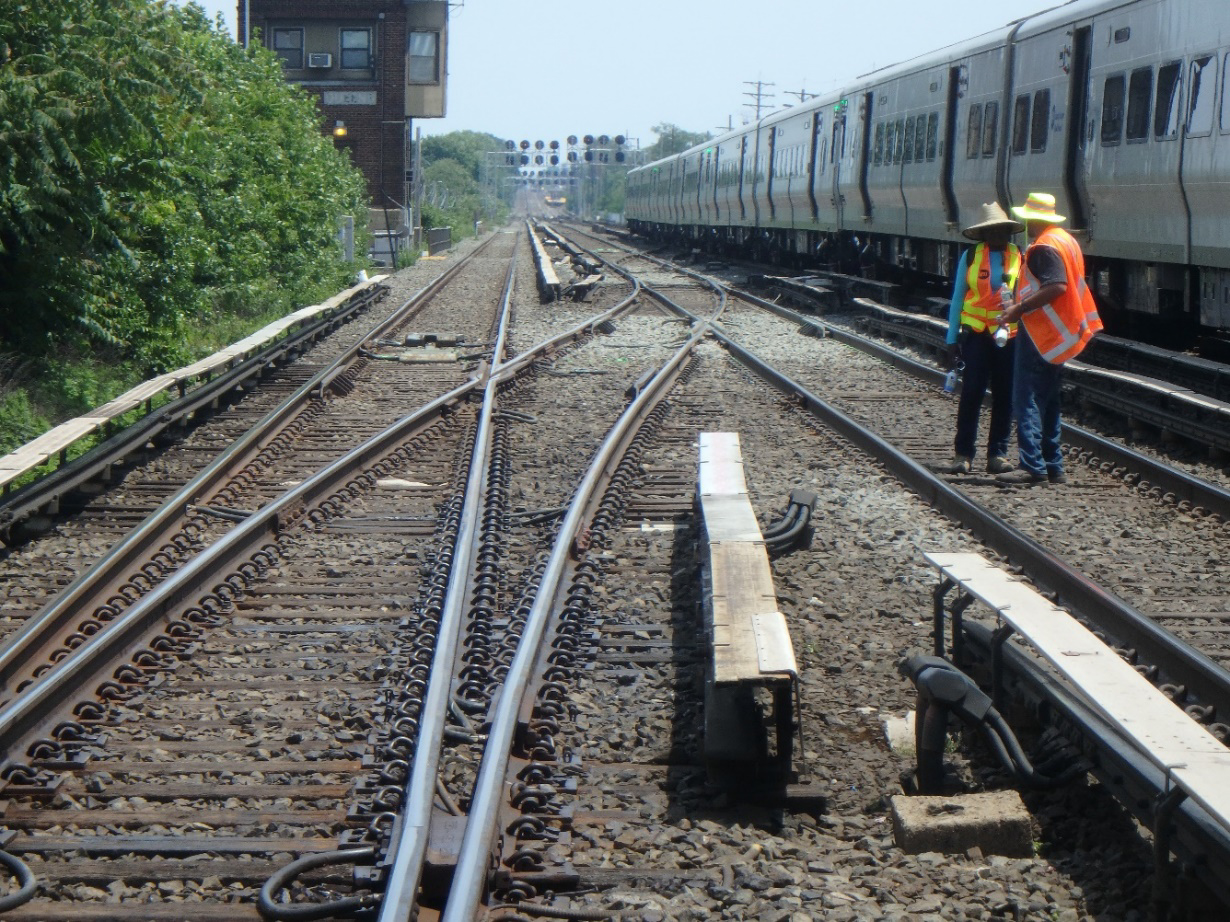
A Long Island Rail Road foreman and three roadway workers were inspecting and making minor track repairs within an interlocking when the foreman stepped into the path of an approaching train and was killed. The roadway workers were protected only by train approach warning. The train was traveling about 78 mph when the locomotive engineer applied the emergency brakes just before impact. The use of train approach warning as the form of protection for the roadway workers on active tracks was determined to be the cause of the accident.
|
Read:
|
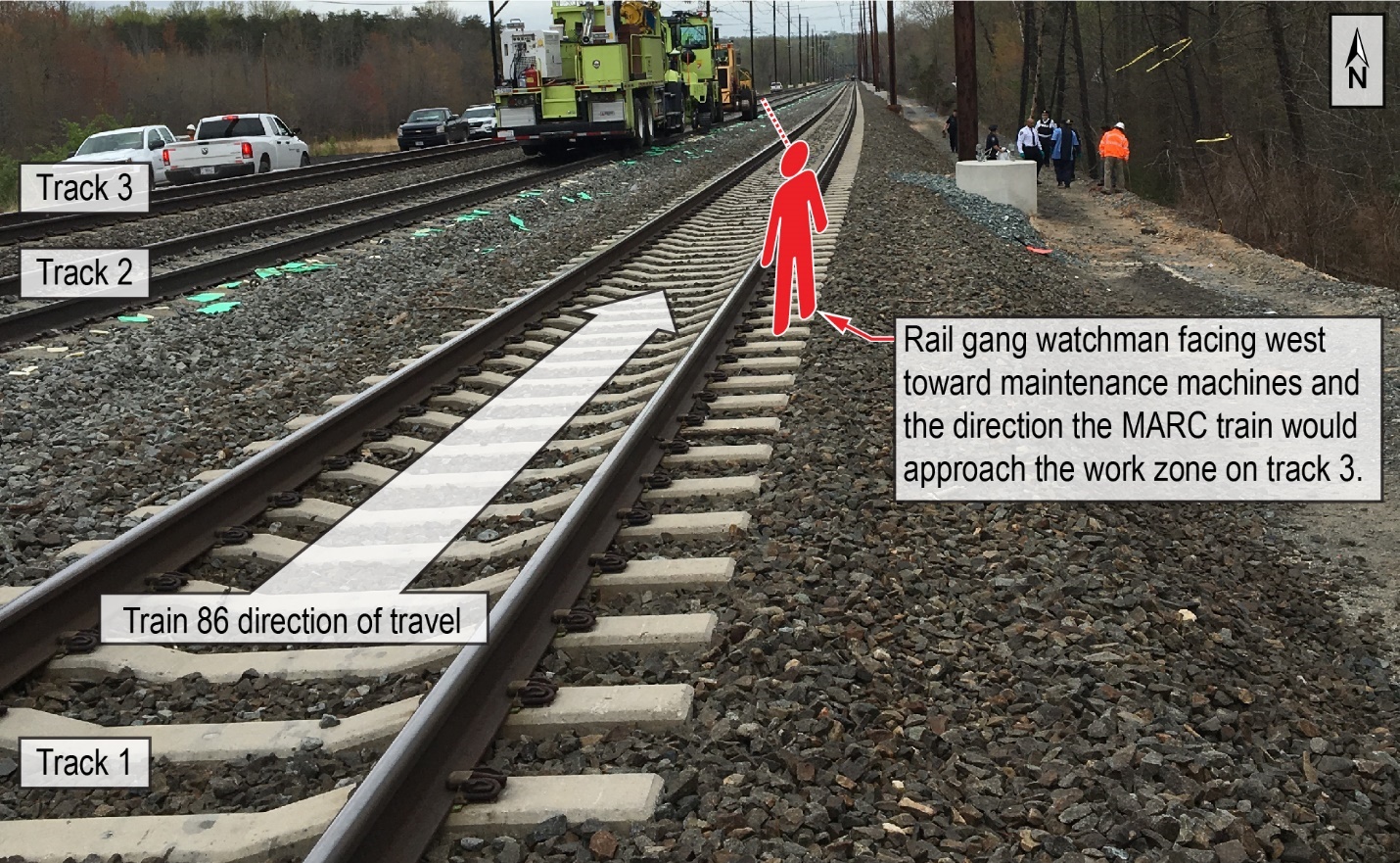
An Amtrak rail gang watchman was struck and killed by an Amtrak passenger train while protecting a maintenance crew in a work zone. The accident was caused by an insufficient site-specific safety work plan that did not account for multiple active main tracks in a high noise environment and the need for a safe place for the watchman to stand with level footing and sufficient sight distance to perform his duties. The lack of a safe place led the watchman to stand on an active track in a work zone in the path of the train. Contributing to this accident was Amtrak’s decision to use train approach warning instead of protections that could have been provided by the positive train control system.
|
Read:
|
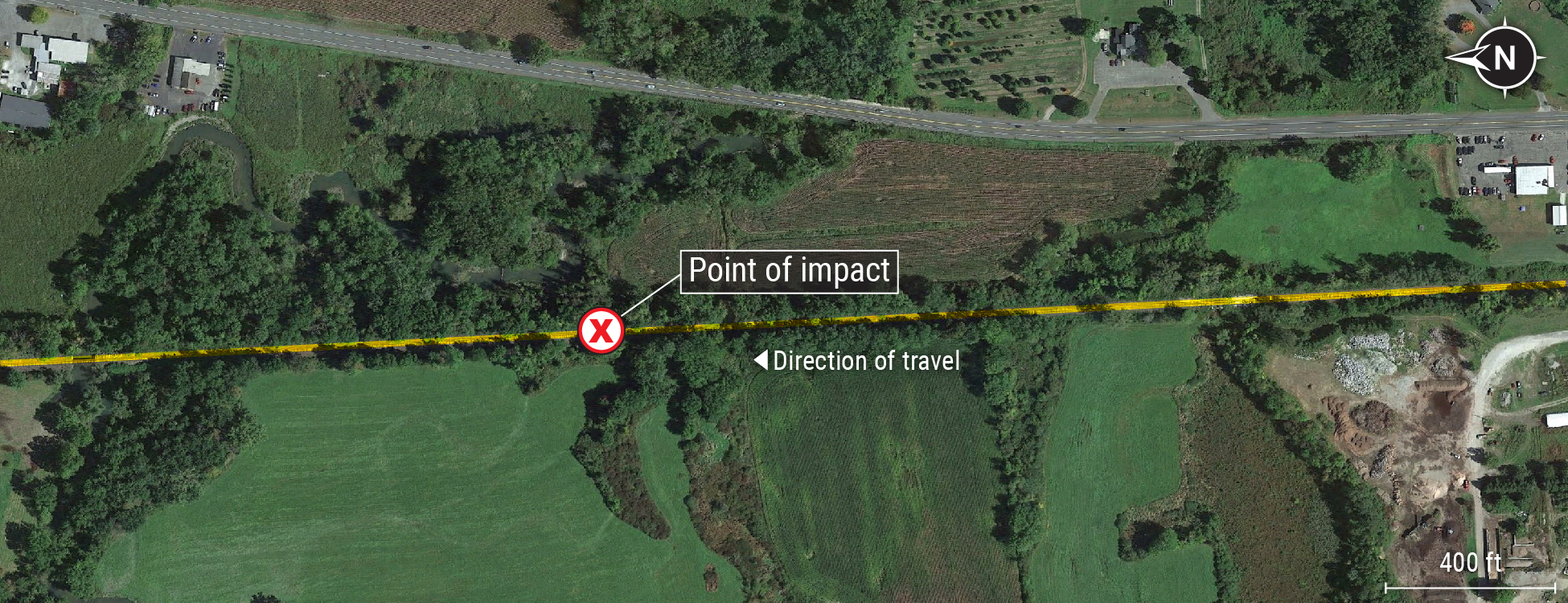
A roadway maintenance machine (RMM) struck and fatally injured a Middlesex Corporation employee performing track work. The RMM involved in the accident was a tie drilling machine, which is commonly referred to as a driller. The driller operator was part of a four-member work group of Middlesex employees. He and another employee had to temporarily remove the driller from the site for repairs. At the end of the return trip, the driller entered the work zone in reverse, and the driller operator did not see that two employees were in the driller’s path. The driller struck and fatally injured one employee. Collision-avoidance systems that can detect people, objects, or other machines on the ground could have automatically stopped the RMM before it struck the employee.
|
Read:
|
Norfolk Southern Railway Contract Roadway Worker Fatality
| |
A National Salvage and Service Corporation worker who was part of a Norfolk Southern Railway work gang was struck and killed by a roadway maintenance machine (RMM) on a main track. Three RMMs, or spikers, were driving railroad spikes into crossties when the middle spiker (Spiker 2) reversed direction. The RMM operator could not see the worker behind the equipment, and while the operator reported that he sounded the horn, the NTSB found that the horn and change-of-direction alarms were nonfunctioning.

|
Read:
|
Watco Dock and Rail, L.L.C. Employee Fatality
|
Houston, Texas
Oct. 29, 2021
|
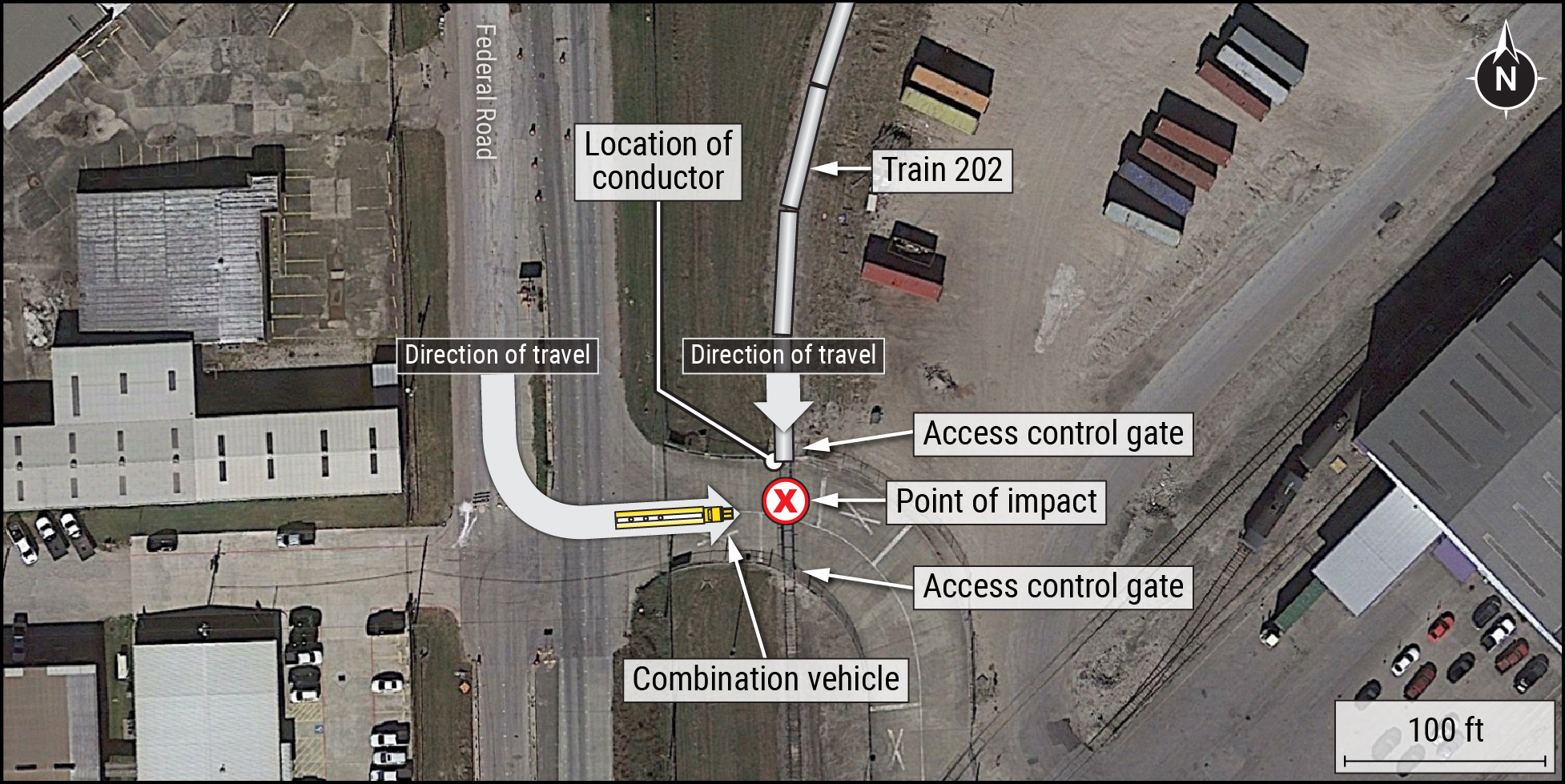
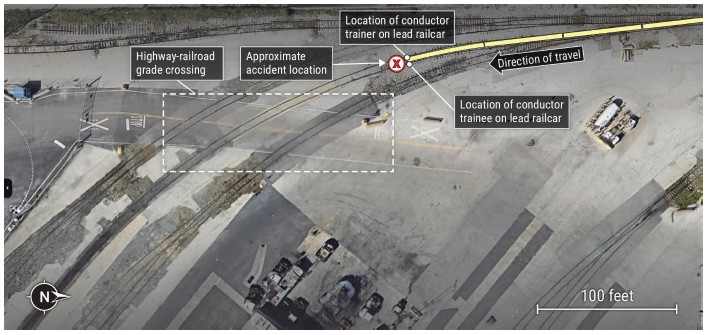
A Watco Dock and Rail, L.L.C. train conductor was killed protecting a shoving movement when the train collided with a combination vehicle at a private highway-railroad grade crossing. The conductor was riding on the platform of the leading railcar of the train when he was pinned between the train and the combination vehicle as both vehicles simultaneously entered the grade crossing of the industrial park. The conductor did not have adequate protection as the train moved through the highway-railroad grade crossing.
|
Read:
|
R.J. Corman Railway Group Conductor Injury
| June 26, 2025
|
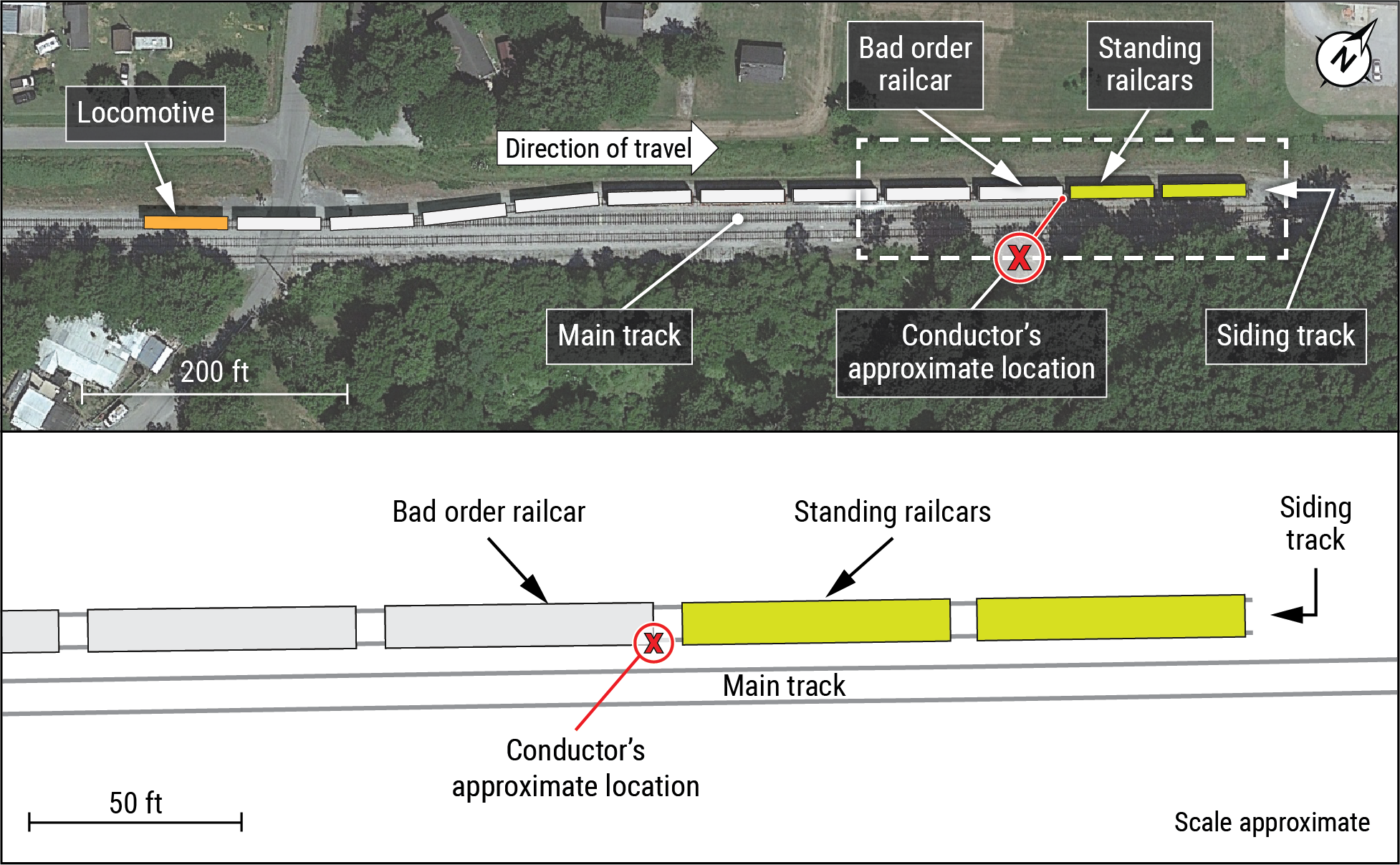
An R.J. Corman Railway Group conductor was seriously injured during a railcar switching operation at Guthrie Yard. The conductor was working with an engineer to separate a damaged railcar from a block of railcars and move it onto a siding track east of the main track. During the switching operation, the conductor suffered a serious injury to his foot when he placed it between equipment to push the knuckle of a coupler into alignment.
|
Read:
|
A CSX Transportation conductor trainee in phase II of conductor training was killed when he fell from an intermodal railcar during a shoving movement and was struck by the train he was riding. The intermodal railcar was difficult to ride safely because of its design, and the railroad’s operating rules did not account for railcar safety appliances that could put employees in unstable positions.
|
Read:
|
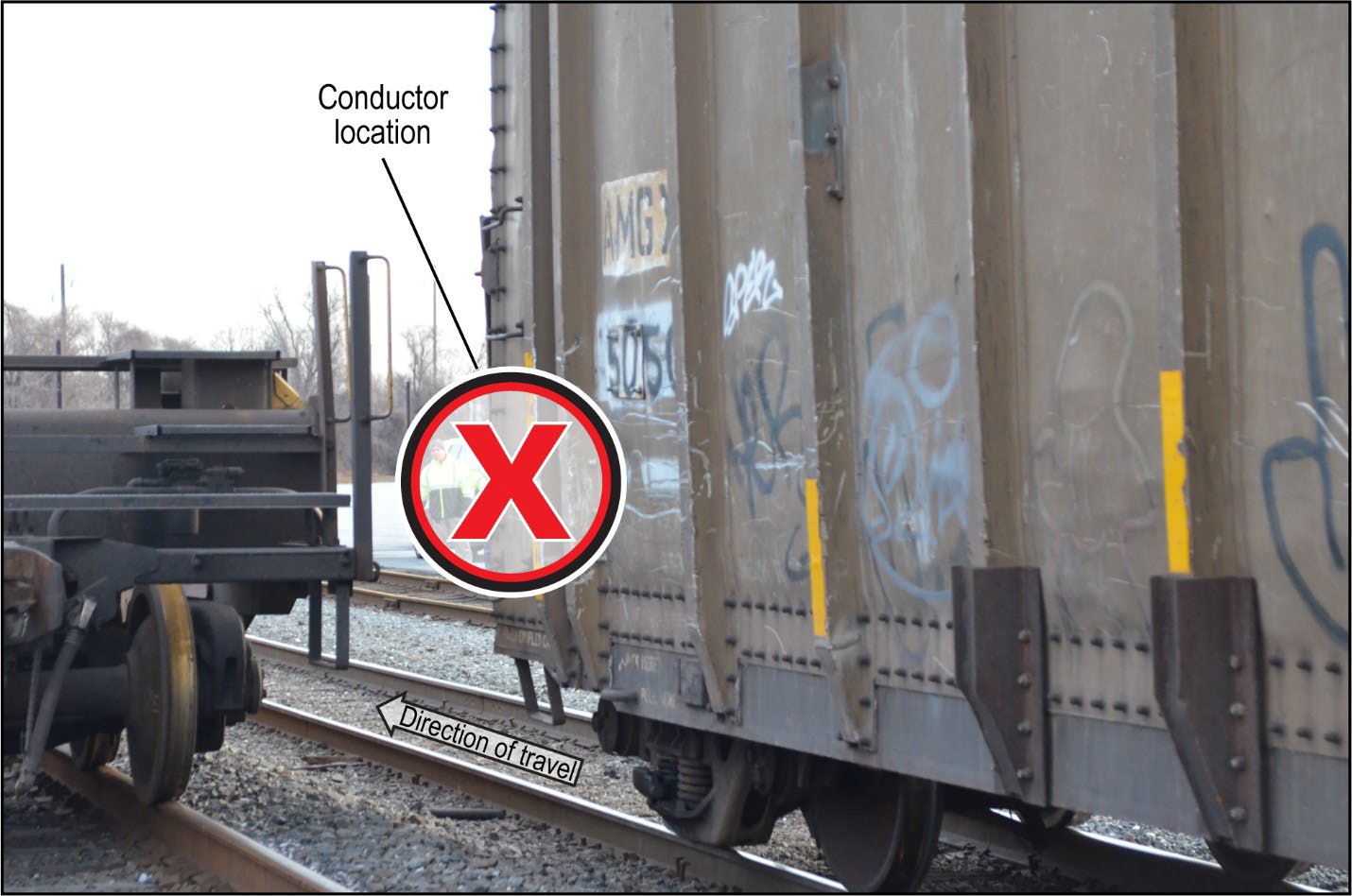
A Norfolk Southern Railway conductor was fatally injured while performing switching operations at the President Street intermodal tracks section of the Bayview Yard. The conductor was riding on the side of the leading railcar of a train during a reverse movement when he was pinned between the railcar he was riding and a stationary railcar on an adjacent track.
|
Read:
|
Union Pacific Railroad Conductor Struck by METRA Commuter Train
| Kenosha, Wisconsin
September 4, 2024
|
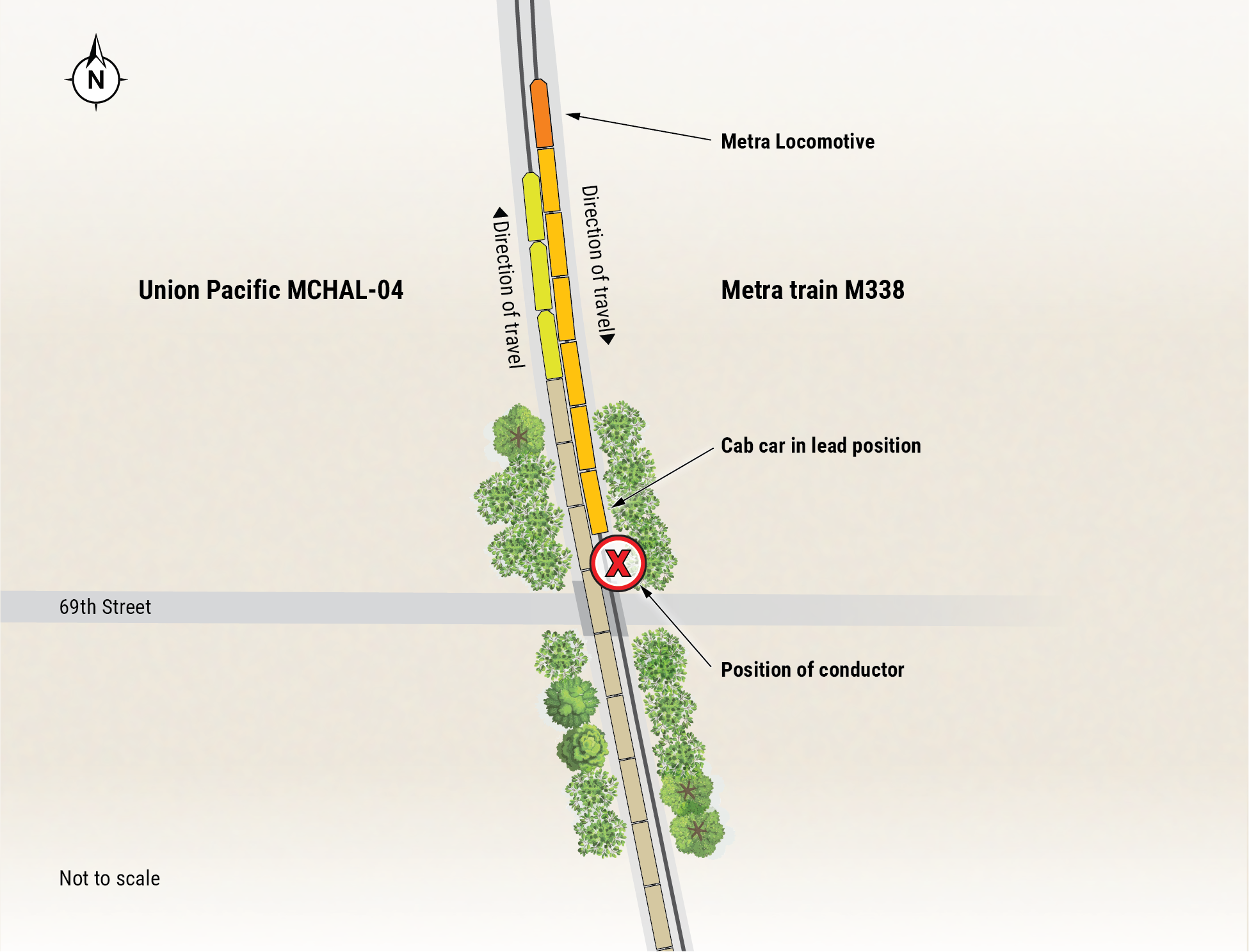
The conductor of a northbound Union Pacific Railroad (UP) train was struck and killed by southbound METRA commuter train when the conductor fouled the adjacent track for unknown reasons while waiting to conduct a wheel inspection. The train crew did not conduct a comprehensive job briefing or discuss the dangers posed by the adjacent active track, and the train’s engineer and engineer trainee did not advise the conductor that a train was approaching.
|
Read:
|
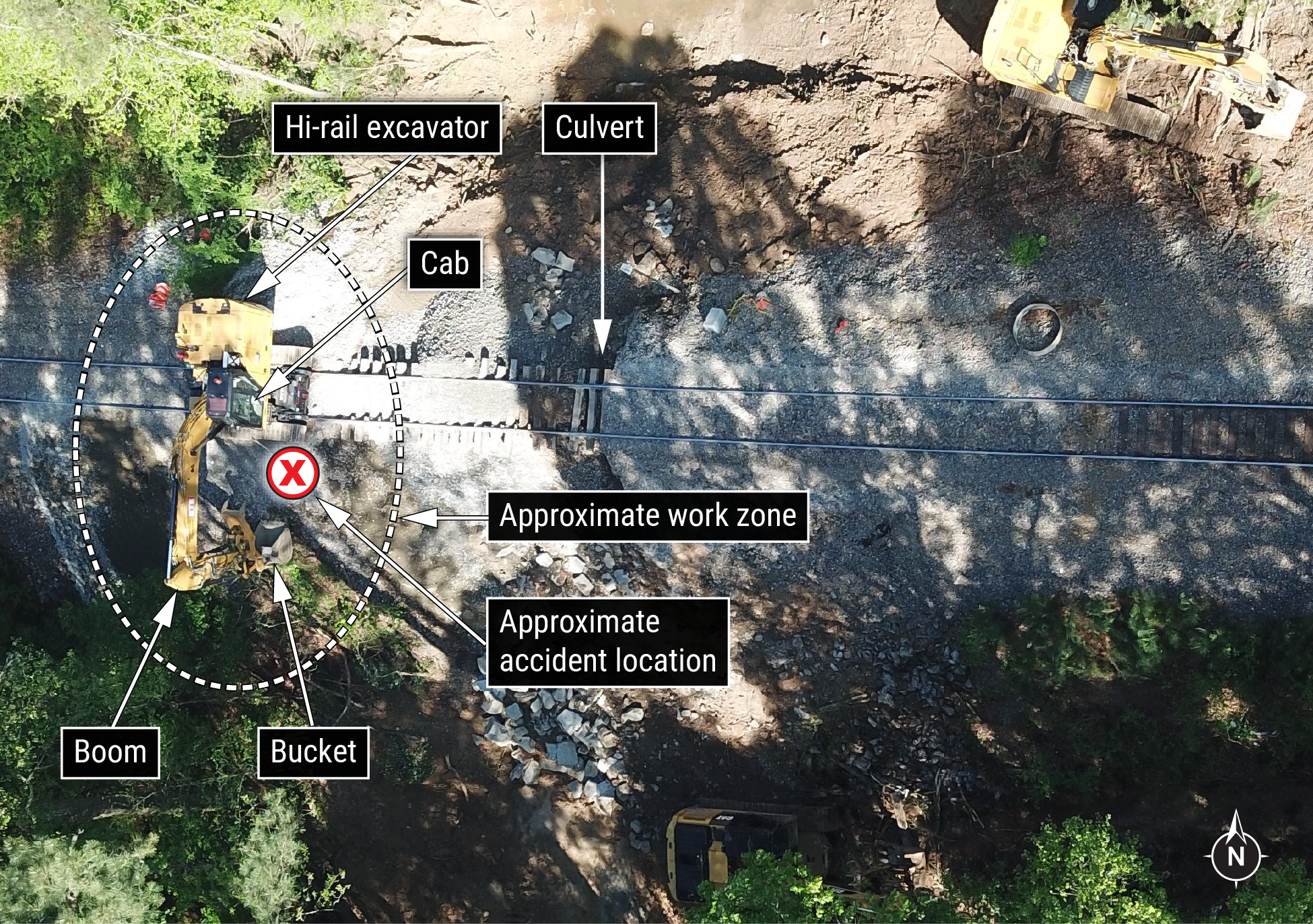
A Union Pacific Railroad (UP) manager of track maintenance (manager) was struck and killed by a roadway maintenance machine (RMM) during maintenance operations on the main track on the Pine Bluff Subdivision. The RMM was a hi-rail excavator operated by a B&P Enterprises employee (operator). The manager was on the south side of the excavator when he was struck by the excavator’s bucket and momentarily pinned between the bucket and the excavator’s tread before falling to the ground. The excavator was not equipped with technology to detect people or objects entering its movement envelope, and the safety of employees working near the excavator depended entirely on rule compliance
|
Read:
|
