Early detection of a vessel is one of the best ways to avoid collision. Owners of recreational boats and small commercial fishing vessels can use devices to improve their vessels’ detectability by enhancing nearby traffic’s awareness of their position.
- Install a radar reflector, which is a device designed to create a strong reflection of radar energy in order to make it clearly visible on ships’ radar screens. The reflector is mounted as high as possible on a boat, typically by hoisting the reflector from an existing or purposed mast.
- Use AIS Class B or B+ to provide identification and position information to vessels and shore stations, allowing small vessels to see and be seen by other ships operating in their area. An AIS transponder consists of a GPS receiver and a VHF data radio. The transponder transmits a vessel’s GPS position on VHF channels dedicated to AIS.
- AIS Class B provides the safety and navigation benefits of AIS to smaller vessels—with lower cost and simpler installation.
- AIS Class B transponders have a lower power output (maximum range of 8–10 miles to nearby vessels), are less expensive, and transmit a vessel’s position less frequently than an AIS Class A transponder.
- Recently, class AIS B+ transponders were introduced. AIS B+ has greater range and transmits positions more frequently than a Class B transponder.
- Radar reflectors and AIS Class B and B+ units are available at commercial and recreational marine suppliers; they are currently used on many small vessels such as sailing vessels, yachts, and power boats.
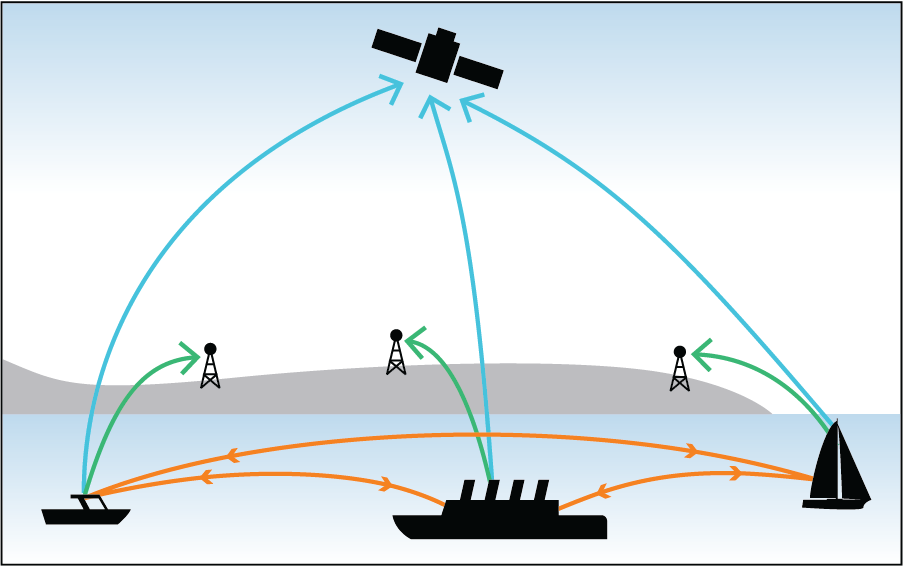 Figure 1. AIS provides digital positional awareness,
ship to ship, ship to shore, and ship to satellite.
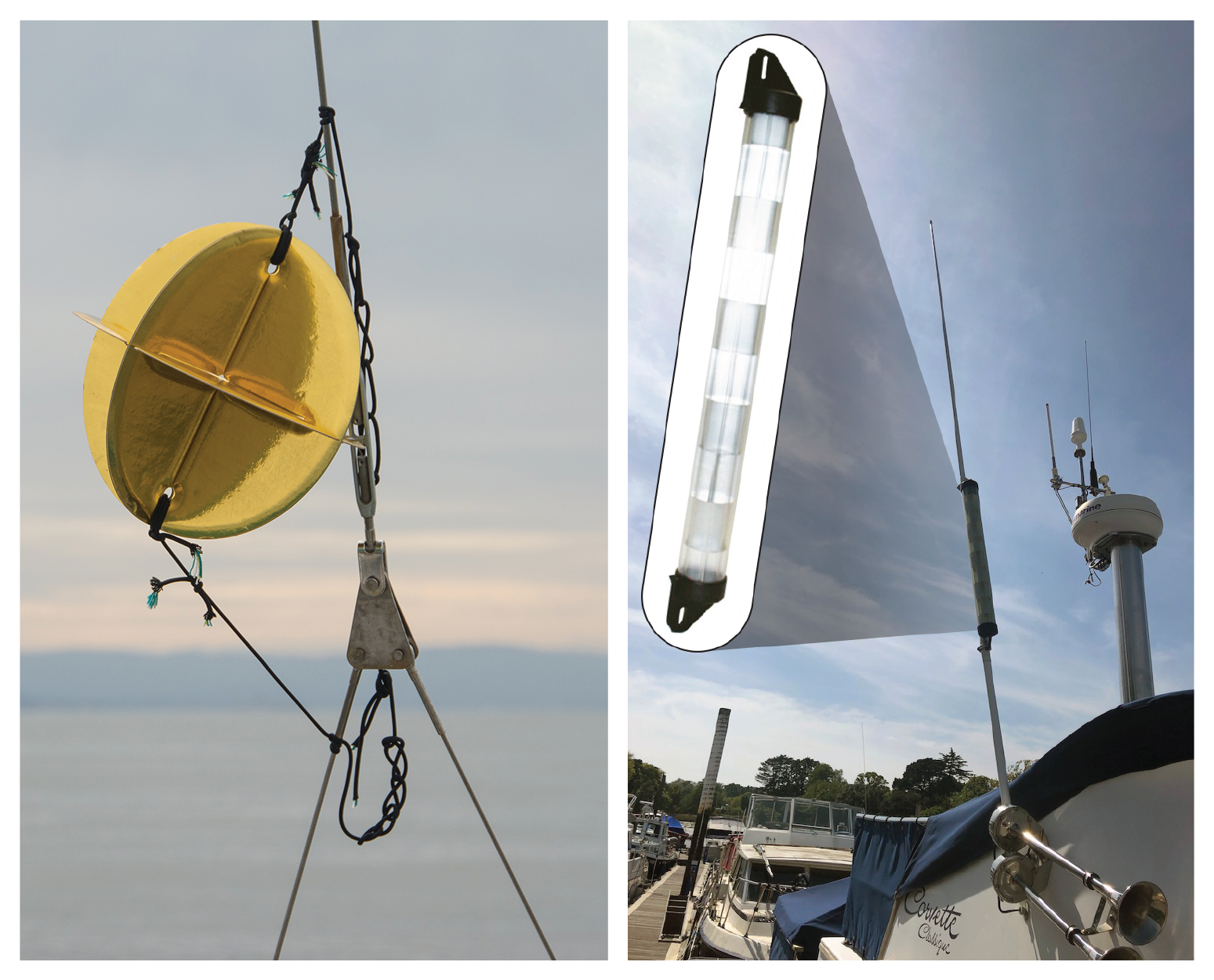 Figure 2.
Above and right: Exemplar radar reflectors mounted on small vessels.
