The investigations below involve accidents where operator presence controls or a collision avoidance system could have prevented or mitigated the severity of an accident Each investigation summary highlights the safety issues examined by the NTSB and includes links to the accident investigation page, the probable cause determination, related reports and documents, and the complete public accident docket.
CSX Transportation Railway Maintenance Machine Operator Fatality
| March 12, 2018
|
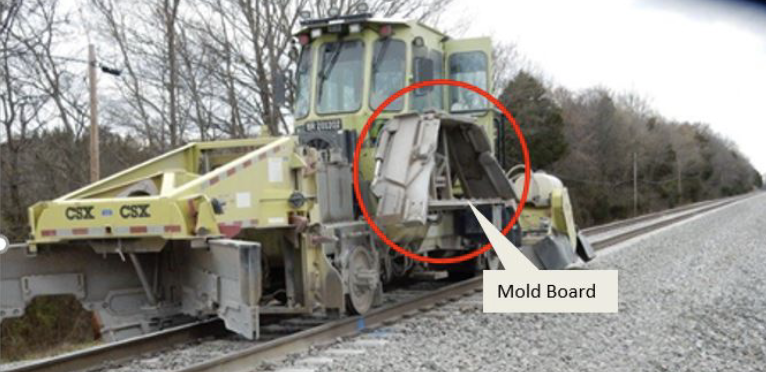
An operator was fatally injury when the roadway maintenance machine (RMM) he was attempting to repair unexpectedly moved. Operator presence controls, which keep an RMM from moving unless an operator is at the controls, would have prevented this accident.
|
Read:
|
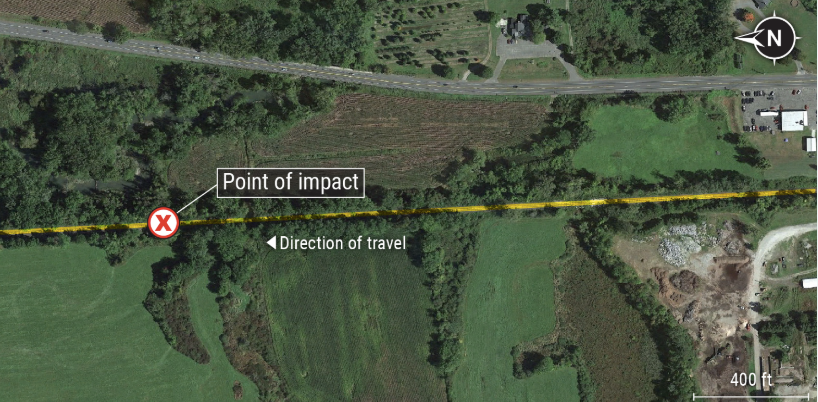
An RMM operator conducting a reverse move into a work zone was not actively monitoring his path and did not see an employee performing track work. The RMM struck and fatally injured the employee. An object- or person-detection system with automatic braking would have prevented this accident.
|
Read:
|
Norfolk Southern Railway Contract Roadway Worker Fatality | Reed, Pennsylvania
December 8, 2021
|
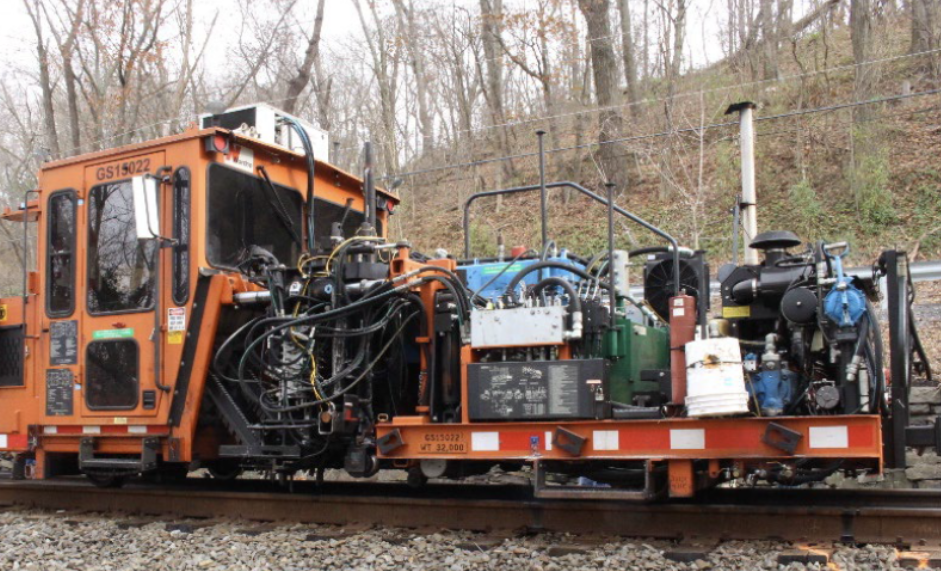
A roadway maintenance machine (a spiker) performed a reverse movement while a worker was positioned in one of the spiker’s blind spots. The worker was fatally injured. Some of the spiker’s safety equipment—its horns and change-of-direction alarms—were not functioning properly at the time of the accident, which reduced the worker’s ability to notice and avoid the approaching spiker. An object- or person-detection system with automatic braking would have prevented this accident.
|
Read:
|
CSX Transportation Employee Fatality
| |
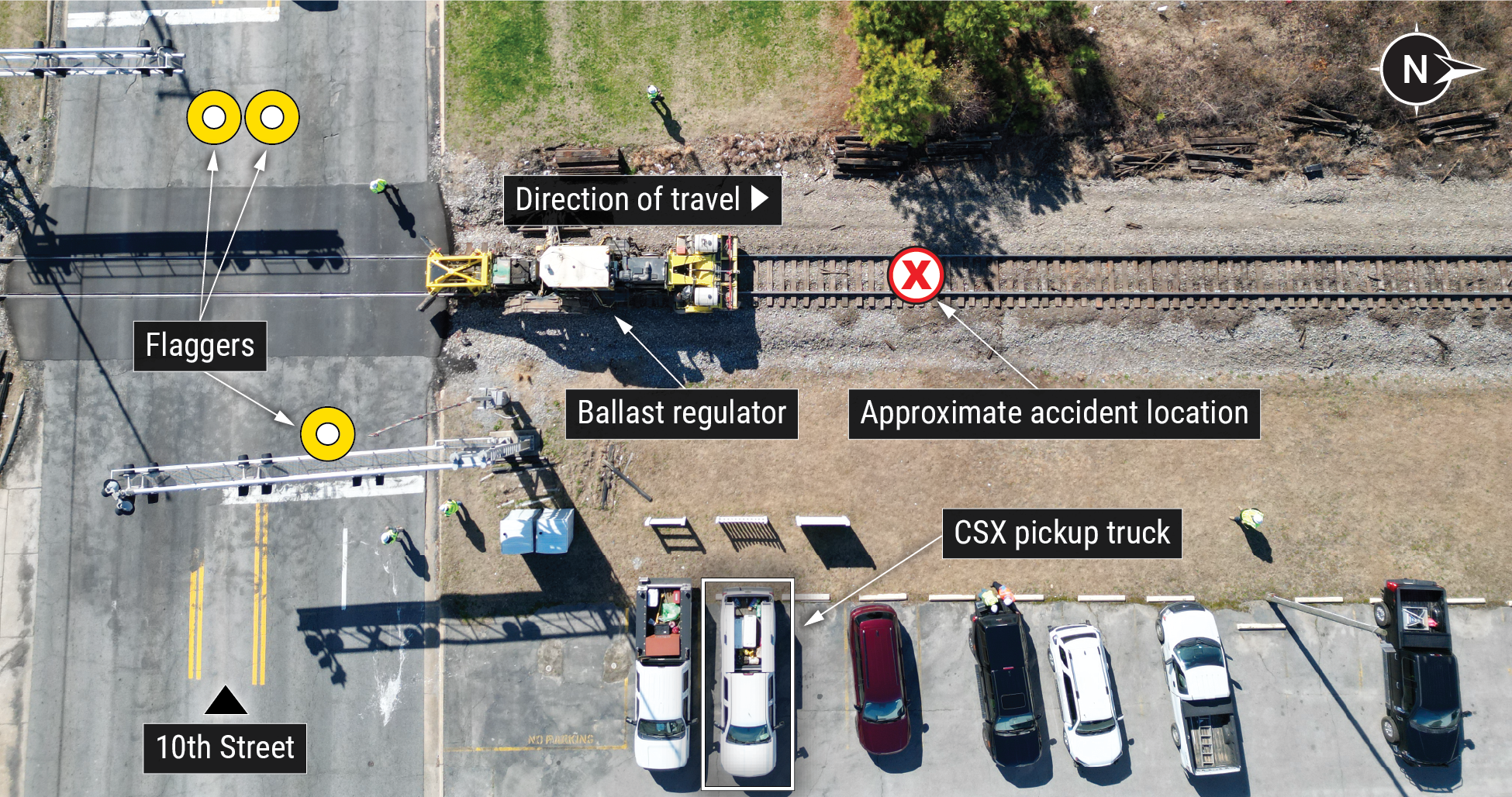
A roadway maintenance machine (a ballast regulator) struck and fatally injured a foreman standing in the gauge of the track. The ballast regulator’s operator did not know that the foreman was standing in the gauge and did not announce the movement. The ballast regulator’s warning devices—a change-of-direction alarm and horn—did not function properly, reducing the foreman’s chances of noticing and avoiding the approaching vehicle. An object- or person-detection system with automatic braking would have prevented this accident.
|
Read:
|
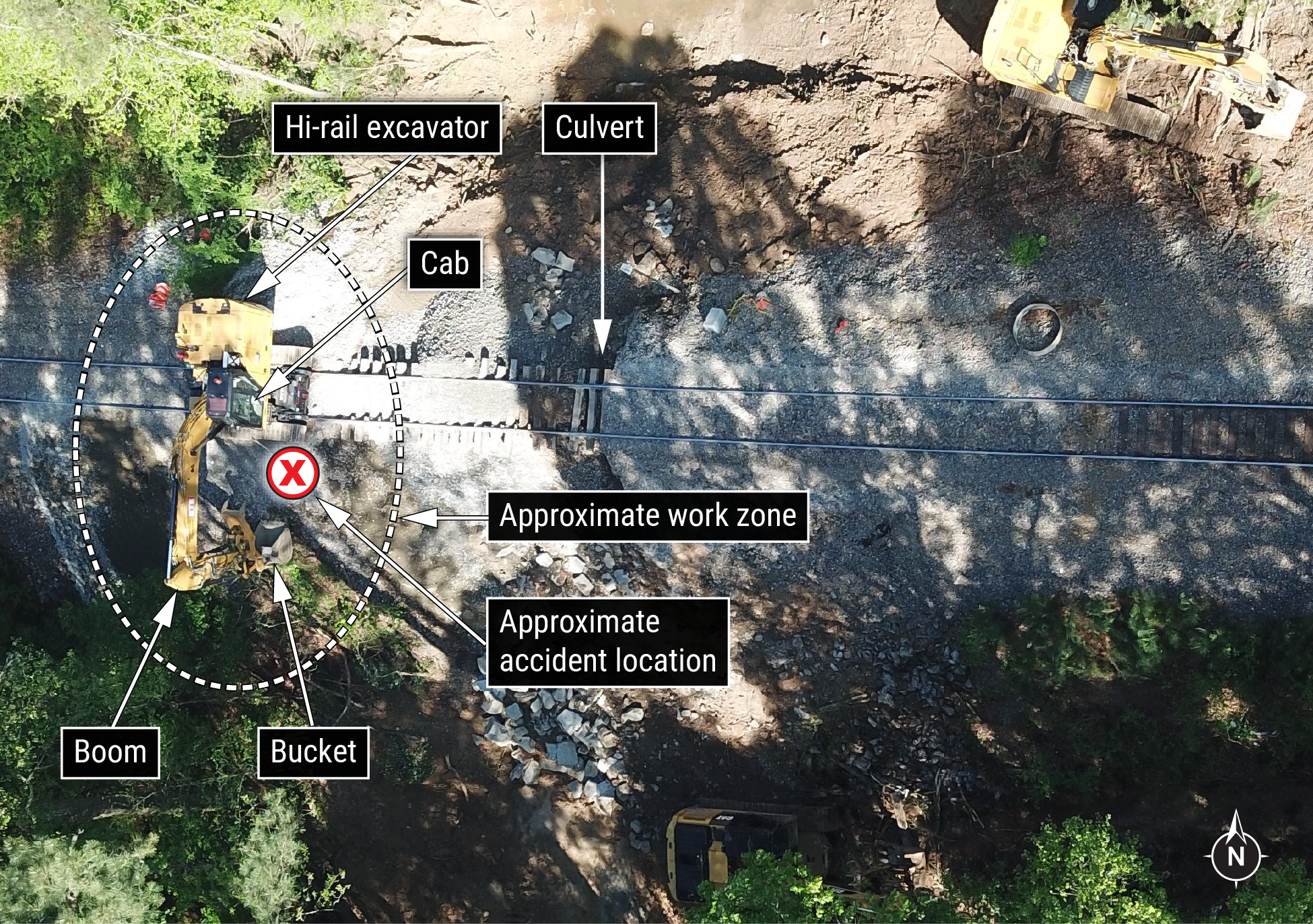
A railroad manager in a work zone walked near an on-track excavator without informing the operator. The operator did not see him and continued working; the railroad manager was fatally injured by the excavator’s bucket. Roadway workers were not complying with safety procedures and did not have adequate safety oversight. The excavator was not equipped with object or person detection systems to protect against human error; such systems would have prevented the accident.
|
Read:
|
